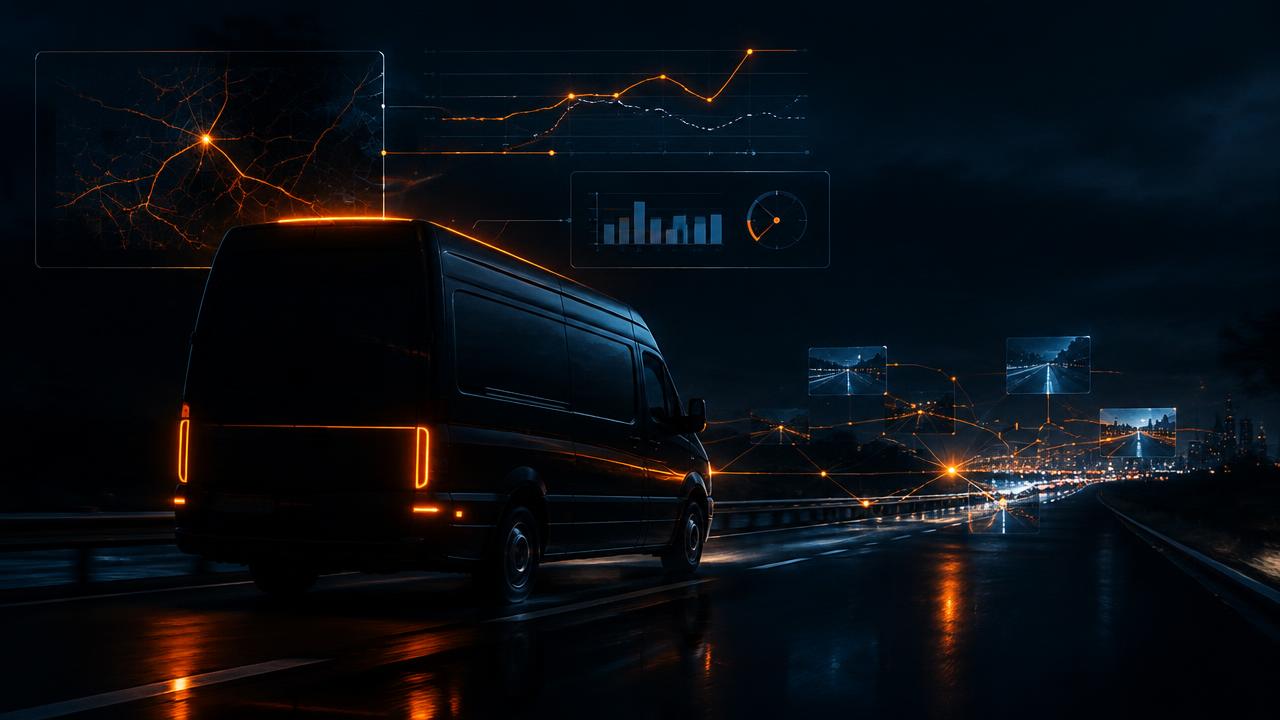
The logistics industry has a complicated relationship with the future. For decades, the primary tool for predicting it has been a spreadsheet, populated with data from the past. You’d average the last few quarters, maybe apply a simple growth percentage, and call it a forecast. This worked, sort of, in a world that was more predictable. It no longer does.
Traditional forecasting is a rearview mirror. It’s excellent at telling you where you’ve been, but it’s a poor guide for the road ahead, especially when that road is filled with unforeseen turns. It can't account for a sudden spike in demand driven by a social media trend, a port closure half a world away, or a sudden change in weather patterns. This reliance on historical averages is the source of the bullwhip effect, where small ripples of customer demand become massive, costly waves of inventory mismatch further up the supply chain.
We keep trying to solve modern, dynamic problems with static tools. The result is guesswork. Educated guesswork, perhaps, but guesswork nonetheless. This leads to costly overstocking, frustrating stockouts, and inefficient routes. Artificial intelligence offers a different approach. Instead of just looking back, it learns the underlying patterns that drive future events, offering a probabilistic glimpse of what's to come.
How AI Learns to Predict
When we talk about "AI" in logistics forecasting, we're primarily talking about machine learning (ML). This isn't about creating a sentient computer. It's about using algorithms to analyze vast amounts of data and identify correlations that a human analyst could never spot.
The key difference between traditional forecasting and an AI-driven model is the breadth and depth of the data inputs. A traditional model might look at one variable: last year's sales. An AI model can ingest and analyze dozens or even hundreds of variables simultaneously.
These data sources include:
- Internal Data: Historical sales, order history, inventory levels, warehouse processing times, and GPS data from your own fleet.
- External Market Data: Point-of-sale data from retailers, competitor pricing, and broad economic indicators like consumer confidence or manufacturing indices.
- Environmental Data: Real-time and forecasted weather patterns, traffic congestion data, and satellite imagery of ports and distribution hubs.
- Unstructured Data: Social media sentiment, online search trends, news articles, and even geopolitical risk reports.
An AI model doesn't just see that you sold 10,000 widgets last October. It might correlate that sales data with a dip in temperature, a competitor's stockout, a rise in positive online reviews, and a decrease in local unemployment. It learns that these factors, in combination, often precede a sales spike. The machine learning model, often a time-series or regression model, is "trained" on this historical data until it can accurately predict past outcomes. Once trained, it can be fed new, live data to generate a forecast about the future. The system continuously refines its own logic, becoming more accurate with every new data point it processes.
Practical Applications in the Supply Chain
This ability to synthesize diverse data and identify hidden patterns translates into tangible advantages across the entire logistics network.
Demand Forecasting and Inventory Management
This is the most direct application. Instead of forecasting based on simple historical averages, companies can generate highly granular predictions. An AI model doesn't just say, "We’ll sell more in Q4." It says, "We predict a 22% increase in demand for SKU #A5B2 in the Pacific Northwest region during the first two weeks of November, driven by an anticipated cold snap and promotional activity from a key retail partner."
This level of detail changes everything. It allows for:
- Reduced Overstocking: Holding excess inventory is expensive. It ties up capital, incurs storage costs, and risks obsolescence. Accurate forecasts mean you only stock what you need.
- Elimination of Stockouts: Lost sales due to stockouts are a silent killer of profits and customer loyalty. Predictive models ensure the right products are in the right place at the right time.
- Smarter Inventory Placement: By forecasting demand at a local or regional level, you can preposition inventory in distribution centers closer to the final customer, reducing delivery times and transportation costs. Amazon's anticipatory shipping patent, where it predicts what you'll buy and moves it closer to you before you even click "order," is the ultimate expression of this concept.
Route and Network Optimization
A forecast isn't just about products; it's about movement. AI-powered Transportation Management Systems (TMS) are moving from static route planning to dynamic, predictive optimization.
Models can analyze real-time traffic data from services like INRIX, factor in weather forecasts, consider driver hours-of-service regulations, and even predict congestion at loading docks. The system might determine that while Route A is the shortest, a predicted traffic jam at 3 PM makes Route B, which is 10 miles longer, 20 minutes faster.
Companies like UPS use their ORION (On-Road Integrated Optimization and Navigation) system to do exactly this. It shaves millions of miles off delivery routes each year, saving millions of gallons of fuel and drastically reducing emissions. The forecast here isn't about sales, it's about time, fuel, and resource availability, which are just as critical to the bottom line.
Predictive Maintenance
One of the biggest sources of disruption in logistics is unexpected equipment failure. A truck breaking down, a conveyor belt snapping, or a sorting machine Sorter-malfunction can halt operations for hours, creating a costly bottleneck.
Predictive maintenance uses AI to forecast these failures before they happen. Sensors placed on vehicles and warehouse equipment collect data on temperature, vibration, running hours, and performance. An AI model analyzes this stream of data, looking for subtle patterns that precede a failure. When it detects an anomaly, it can automatically generate a maintenance alert.
This allows a fleet manager to schedule a truck for service during its planned downtime instead of dealing with an expensive and disruptive roadside breakdown. It transforms maintenance from a reactive, emergency-based activity into a proactive, data-driven process, boosting asset uptime and improving safety.
How to Get Started with AI Forecasting
Implementing AI forecasting might sound like a project reserved for giants like Amazon and Walmart, but the technology is becoming increasingly accessible. Here’s a practical path for integrating these capabilities.
1. Organize Your Data
AI runs on data. The first, and most critical, step is to get your data house in order. You can't build a forecasting model on a collection of siloed, messy spreadsheets. Start by identifying your key data sources:
- Sales and order history from your ERP.
- Shipment and tracking data from your TMS.
- Inventory data from your WMS.
Your goal is to consolidate this information into a clean, centralized repository. This concept of a "single source of truth" is fundamental. The quality of your AI's predictions will be a direct reflection of the quality of your data.
2. Define a Specific Business Problem
Don't boil the ocean. Instead of a vague goal to "improve forecasting," pick a specific, high-impact business problem. Frame it as a question that data can answer.
- "Which 10 SKUs account for 80% of our stockout-related losses?"
- "How much could we reduce our transportation costs by optimizing routes for our top 20 lanes?"
- "Can we predict late shipments from our top five suppliers with 75% accuracy?"
Focusing on a narrow problem provides a clear target, makes it easier to measure success, and generates a tangible ROI that can justify further investment.
3. Evaluate Your Options: Build, Buy, or Partner
You don't need a team of PhDs to get started. For most companies, building a custom AI model from scratch isn't practical. The more common routes are:
- Buy: Many modern logistics software platforms (TMS, WMS, ERP) are now embedding AI forecasting features. Vendors like Blue Yonder, Kinaxis, or C.H. Robinson's Navisphere platform offer these capabilities as part of their solution. This is often the fastest and most cost-effective way to get started.
- Partner: If you have unique needs that off-the-shelf software can't meet, you can work with a specialized AI consultancy. They can help you build a tailored solution using platforms like Google Cloud AI or AWS SageMaker without the overhead of hiring a full-time data science team.
4. Run a Pilot and Scale
Start small. Take the specific business problem you identified and run a pilot project. For a few months, run your new AI-driven forecast in parallel with your traditional methods.
Compare the results. Was the AI forecast more accurate? Did it lead to a measurable reduction in costs or an improvement in service levels? This pilot project serves two purposes. First, it validates the technology in your specific environment. Second, its success provides the hard data you need to gain organizational buy-in for a broader rollout.
The goal of AI forecasting isn't to create a perfect crystal ball. Every forecast, no matter how sophisticated, will have a margin of error. The objective is to be consistently less wrong. It's about reducing the scope of uncertainty, allowing you to make better, faster decisions with more confidence. In a world of increasing volatility, the ability to move from reactive guessing to proactive, data-driven planning is what separates the companies that struggle from the ones that thrive.