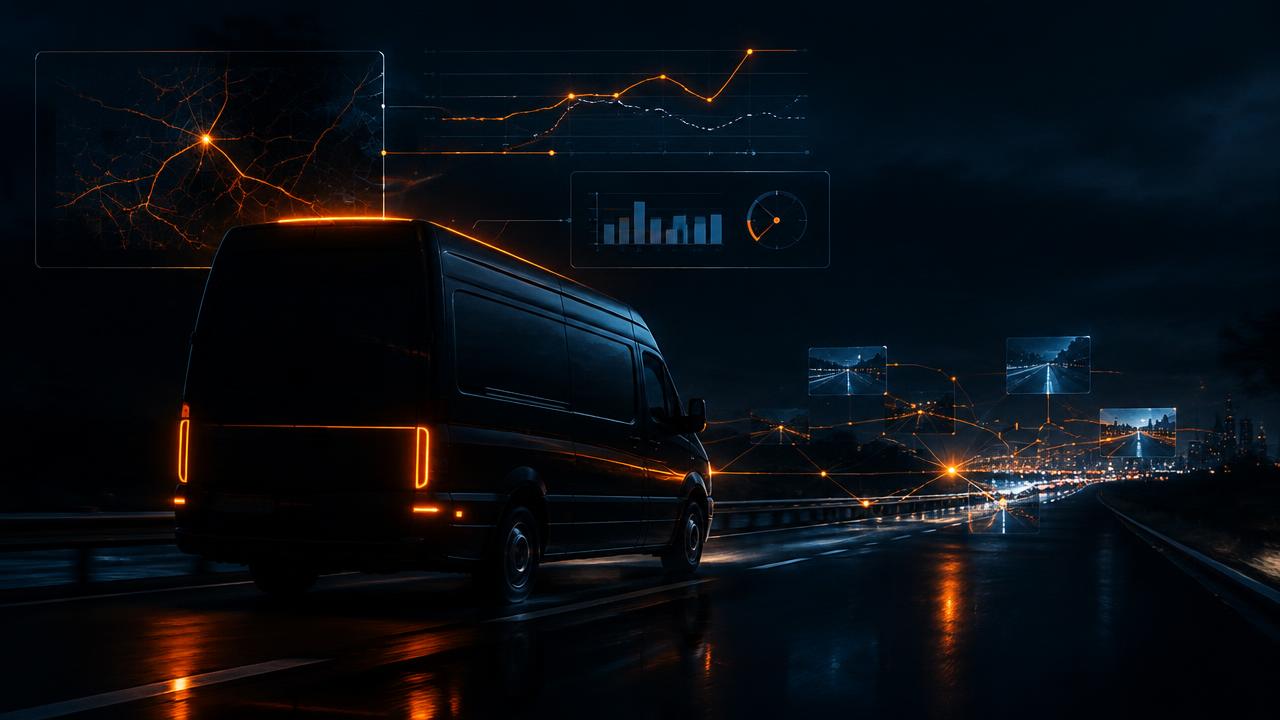
The "out for delivery" notification is a modern token of anticipation. For the customer, it signals the final step of a purchase. For the courier company, it signifies the start of the most complex and unpredictable phase of the entire logistics chain: the last mile. This final leg is where a perfectly executed warehouse pick-and-pack can be undone by a single traffic jam, a sudden downpour, or an unexpected road closure.
Traditionally, logistics has been a reactive field. A driver gets stuck in traffic, radios dispatch, and a new plan is hashed out on the fly. A delivery van breaks down, and a frantic scramble begins to transfer packages and salvage the day's schedule. This approach is costly, inefficient, and creates the kind of customer frustration that erodes trust. Predictive analytics, a practical application of artificial intelligence, offers a fundamental shift from this reactive model to a proactive one. It’s not about gazing into a crystal ball; it's about using data to calculate the probability of future events and taking action to mitigate risks before they become full-blown disruptions.
From Looking in the Rearview Mirror to Seeing Around the Corner
At its core, predictive analytics for courier services is about pattern recognition on a massive scale. It sifts through enormous datasets to find subtle correlations that a human dispatcher, no matter how experienced, could never spot. The goal is to answer questions like: "What is the likelihood of a 30-minute delay on this route between 3 PM and 5 PM on a Friday?" or "Which vehicle in our fleet is most likely to experience a mechanical failure in the next 72 hours?"
By answering these questions with a high degree of statistical confidence, courier companies can move from fixing problems to preventing them. They can 'see' around the corner, metaphorically speaking, and adjust their operations based on what is likely to happen, not just what has already happened. This foresight is built upon a foundation of rich and varied data.
The Data Ingredients for a Reliable Prediction
The accuracy of any predictive model depends entirely on the quality and breadth of its input data. It’s a sophisticated recipe that combines information from numerous sources. The system doesn't just look at one or two factors; it analyzes the interplay between dozens of them.
Key data points typically include:
- Historical Performance Data: Every past delivery provides a lesson. This includes transit times for specific routes at different times of day, successful delivery rates, addresses with common access issues (like gated communities or high-rise buildings), and seasonality effects on package volume.
- Real-Time Fleet Data: Live GPS tracking from every vehicle in the fleet is the bare minimum. This shows not only where a driver is but also how fast they are moving, how long they've been idle, and their progress relative to the day's schedule.
- Live Traffic and Weather Feeds: Integrating with external services like Google Maps, Waze, or national weather services provides a live view of road conditions. The model doesn't just see a traffic jam; it sees the start of one and can calculate its likely impact on ETAs down the line. It also factors in how rain, snow, or high winds historically affect driving speeds in specific areas.
- Vehicle Telematics: Modern delivery vans are filled with sensors. These provide a constant stream of information on engine health, fuel levels, tire pressure, and battery voltage. This data is crucial for predicting mechanical failures.
- Order Information: The model knows the size, weight, and destination of every package on a truck. It can use this to calculate the time needed for each stop more accurately. A stop to deliver a small envelope is much faster than one to deliver a piece of furniture requiring a signature.
By feeding these diverse data streams into a machine learning model, the system learns the intricate patterns of the delivery network. It learns that Route A is fast in the morning but slows to a crawl after 3 PM. It learns that Van #123 shows a specific sensor reading three days before its alternator typically fails. This is the intelligence that drives operational improvements.
Practical Applications in Courier Operations
Understanding the theory is one thing. Seeing how predictive analytics is applied on the ground is where its value becomes clear.
Dynamic Route Optimization
Static routing is a thing of the past. A driver's route planned at 8 AM might be horribly inefficient by noon. Predictive systems perform dynamic route optimization.
Imagine a driver in Atlanta is scheduled to take I-75 North. The system, analyzing historical data and current traffic flow, calculates a 70% probability of a major slowdown in the next 20 minutes due to rush hour build-up. Instead of letting the driver hit the congestion, the system automatically reroutes them onto a secondary highway before the delay occurs, saving fuel and time. It's not just reacting to a red line on a map; it's predicting the red line will appear and avoiding it preemptively.
Sharpening the Accuracy of ETAs
Vague delivery windows like "between 9 AM and 5 PM" are a primary source of customer dissatisfaction. Predictive analytics allows for much tighter and more reliable Estimated Times of Arrival (ETAs).
The system continuously recalculates a driver's ETA based on their current location, the predicted traffic on the remainder of their route, and the estimated time needed for the remaining stops. This allows the company to send a notification to a customer saying their package will arrive between 2:15 PM and 2:45 PM. As the driver gets closer, that window can be narrowed further. This level of precision reduces the number of failed delivery attempts because the customer knows when to be home, which in turn saves the company the significant cost of a second attempt.
Proactive Vehicle Maintenance
A vehicle breakdown is a catastrophic failure for a daily delivery route. It causes significant delays, requires costly roadside assistance, and disrupts the schedule for potentially dozens of customers.
Predictive maintenance uses vehicle telematics to forecast failures before they happen. For example, a model might learn that a particular van model's starter motor begins drawing a higher amperage a week before it fails. When the system detects this electrical signature in a vehicle, it can automatically flag it for maintenance. The part can be replaced overnight or during scheduled downtime, preventing a breakdown that would have otherwise stranded a driver mid-route. This transforms the maintenance budget from a reactive expense to a predictable, preventative investment.
Smarter Resource and Workforce Allocation
Courier operations face fluctuating demand. A major online retailer's flash sale can flood a specific neighborhood with packages, overwhelming the local driver.
Predictive analytics forecasts package volume at a granular level. By analyzing historical trends, marketing calendars of major clients, and even local events, the system can predict demand spikes. A logistics manager might see a forecast for a 30% increase in volume for a specific postal code next week. Armed with this knowledge, they can schedule an additional driver or rebalance routes to ensure the area has enough capacity to handle the load without creating a bottleneck.
The Tangible Impact on Business and Customers
The adoption of predictive analytics isn't just an academic exercise in data science. It has measurable effects on both the company's bottom line and the customer's experience.
A More Efficient Operation
The operational benefits are direct and significant.
- Fuel Savings: Dynamic routing minimizes mileage and idle time spent in traffic, which can reduce fuel consumption by as much as 10-20% across a large fleet.
- Lower Maintenance Costs: Proactive maintenance prevents expensive roadside repairs and minimizes vehicle downtime, increasing the overall utilization of the fleet.
- Improved Asset Utilization: With smarter demand forecasting, companies can do more with the same number of vehicles and drivers, delaying the need for capital-intensive fleet expansion.
A Superior Customer Experience
For the customer, the primary benefit is reliability. When a courier company consistently meets or beats its predicted delivery times, it builds powerful brand loyalty. Fewer delays and proactive communication about the few that are unavoidable transform the delivery experience from a source of anxiety into a point of satisfaction. This reliability is a key differentiator in a crowded market.
The Human in the Loop
It’s a common misconception that these AI-powered systems are designed to replace human dispatchers and managers. The reality is they are powerful tools designed to augment human expertise. The predictive model can suggest a route change, but an experienced dispatcher might override it because they know about a local event, like a school letting out, that the model hasn't accounted for.
The system provides the data-driven probability; the human provides the context and makes the final judgment call. This combination of machine intelligence and human experience creates a logistics operation that is both incredibly efficient and resilient enough to handle the real world's endless exceptions. The technology empowers employees, giving them the foresight they need to be more effective at their jobs. It removes the guesswork and allows them to focus on strategic decisions.
Ultimately, predictive analytics is redefining the boundaries of what's possible in logistics. As more data becomes available from IoT devices, smarter city infrastructure, and connected vehicles, the predictions will only become more precise. The gap between a package's promised arrival and its actual delivery time is shrinking, all thanks to the power of seeing what's coming and having a plan ready before it arrives.