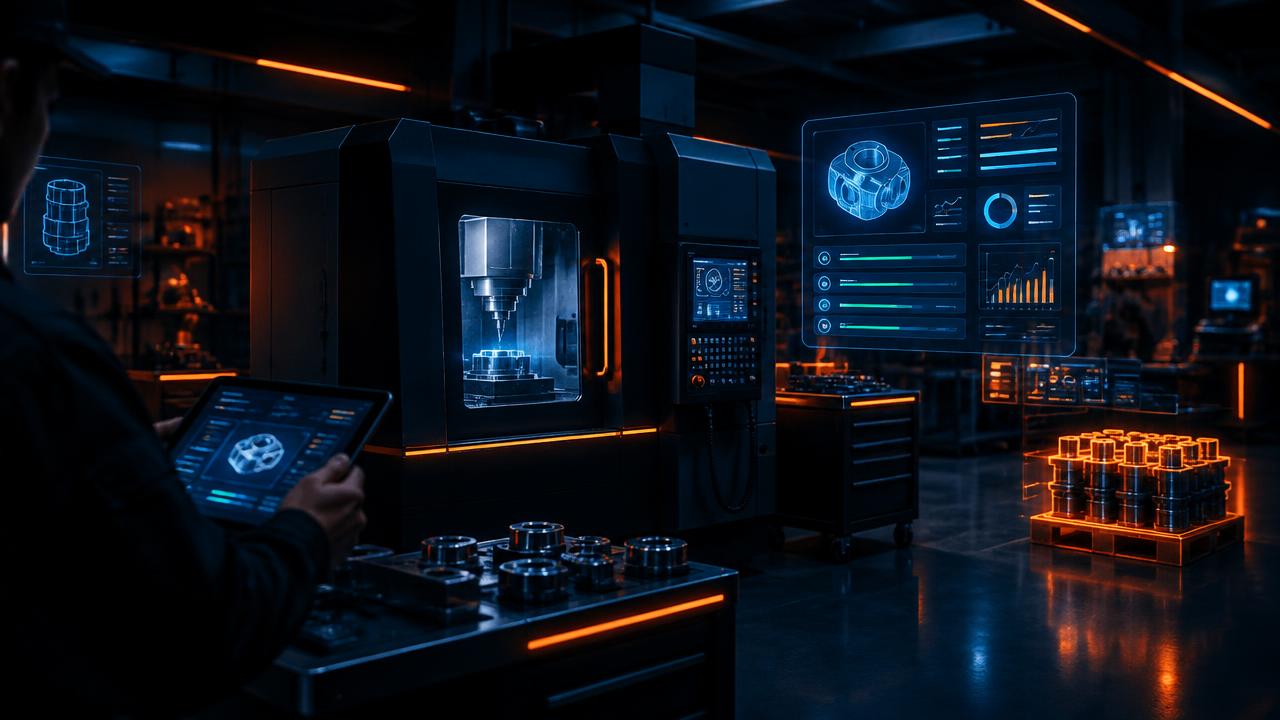
Large manufacturers use manufacturing execution systems to track every job, machine and operator. Smaller manufacturers often run on whiteboards, paper travellers and spreadsheets. The goal is the same in both cases: know what is being made, where it is, and what is holding it up.
Start with visibility
- Which jobs are in progress and at which stage.
- Which machines are running, idle or down.
- What material is allocated and what is short.
- Which orders are at risk of missing their date.
Simple data capture
Tablets at workstations, barcode or QR scans on job travellers and simple start, pause and complete buttons can replace paper without slowing operators down. Where machines expose data, connecting them adds run times and stoppages automatically.
Quality and traceability
Recording batches, inspections and non-conformances against each job builds traceability from raw material to finished product. That matters for customer audits and for finding the root cause when something goes wrong.
If the floor has to stop to update the system, the system will lose.
Connect to the rest of the business
Production data is most useful when it flows to planning, purchasing and finance. Linking tracking to your ERP or accounting system turns shop-floor updates into accurate costing and delivery promises.
Grow in stages
Begin with one line or one product family, prove the value, then expand. A focused tracking tool built around how your floor works today is often more valuable than a large system configured around someone else’s process.